
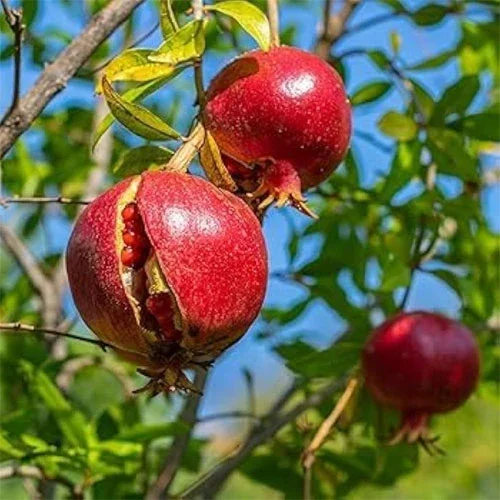
Why Bhagwa Pomegranates Last Longer in Export Transit
Discover why Indian Bhagwa pomegranates perform well in export transit, from thick rind and low respiration to cold-chain temperature, humidity, grading, packaging, and Costita’s export-ready sourcing approach.
Why Bhagwa Pomegranates Last Longer in Export Transit
For global fruit buyers, pomegranate sourcing is not only about colour, sweetness, or price. It is about arrival quality. A shipment may look profitable at dispatch, but if the fruit arrives with shrivelled skin, dull rind colour, internal browning, fungal decay, or weight loss, the real landed cost increases immediately.
That is why Indian Bhagwa pomegranates are widely preferred for long-distance fresh fruit export. The variety is known for its bright rind, attractive arils, soft seeds, sweet taste, and better keeping quality when handled through the right cold-chain system.
At Costita, we treat Bhagwa pomegranates as a cold-chain-sensitive export product, not a basic fruit commodity. The quality advantage comes from the full system around the fruit: orchard selection, maturity control, grading, pre-cooling, packaging, humidity management, reefer movement, documentation, and buyer-specific shipment planning.
Common cold-chain range used for export handling and retained samples, supported with high relative humidity to reduce shrivelling risk.
Recommended relative humidity range often used for pomegranate storage to protect rind appearance and reduce moisture loss.
Recent export movement has also shown the potential of Indian Bhagwa for distant markets. APEDA reported sea shipment of Indian Bhagwa pomegranates to the U.S. East Coast, with arrival quality reported as excellent after the fruit reached within five weeks of departure. The same update noted shelf-life trials aimed at extending pomegranate storage performance up to 60 days.
The reason Bhagwa can perform well is not one single factor. It is the combined effect of peel strength, respiration control, temperature discipline, humidity management, maturity selection, packaging, and careful handling. Shelf life is not assumed; it is engineered.
Shelf Life Starts With the Fruit’s Natural Structure
A pomegranate is naturally more suitable for transport than many soft fruits because the edible arils are protected inside a firm outer rind. Unlike grapes, berries, or mangoes, where the edible portion is more directly exposed, pomegranate arils sit behind a protective shell that slows visible quality loss.
In the Bhagwa variety, this structural advantage becomes commercially important. Bhagwa is valued for its red rind, red arils, soft seeds, sweetness, and medium-thick rind, making it suitable for buyers who need fruit that can travel across longer supply chains without losing presentation value too quickly.
The rind works as the first defence layer. It reduces direct exposure, protects against minor handling pressure, slows moisture loss, and helps the fruit maintain a stronger external appearance when temperature and humidity are controlled properly.
Bhagwa Shelf-Life Control Chain
This diagram shows how Bhagwa’s natural fruit structure works with export handling. The rind gives the fruit a biological advantage, but cold-chain control protects that advantage during international transit.
Protective rind
Medium-thick peel helps protect arils and slows visible quality decline.
Sorting and grading
Defect removal, size consistency, and clean packing reduce shipment risk.
Cold chain
Temperature and humidity discipline preserve quality during long-distance movement.
Natural protection
The rind protects internal arils better than many thin-skinned fresh fruits.
Lower damage risk
Careful harvesting, crate movement, and carton strength reduce bruise-related losses.
Better arrival appeal
Stronger skin appearance supports better buyer confidence at destination.
For buyers, rind quality matters because most export complaints become visible first on the outer surface. Shrivelling, scald, bruising, fungal spotting, and dull skin reduce commercial confidence even when the internal arils are still acceptable.
Peel Thickness Reduces Water Loss and Shrivelling
One of the biggest reasons fresh fruit loses value during transit is water loss. When fruit loses moisture, the skin shrinks, the weight drops, and the external appearance declines. In pomegranates, this appears as dry, wrinkled, or leathery rind.
Bhagwa’s medium-thick rind gives the fruit a stronger barrier against moisture loss. This does not remove the need for proper humidity control, but it gives exporters a better biological foundation for long-distance sea and air shipments.
Packaging and storage conditions make a major difference. Research on Indian pomegranate storage has shown that wrapped Bhagwa fruit can lose far less weight than non-wrapped fruit under controlled storage conditions, proving how important moisture protection is for export performance.
Costita buyer insight: Water loss is not only a quality problem. It is a margin problem. If the fruit loses weight or the rind shrivels, the importer may face lower sellable yield, weaker shelf presentation, faster discounting, or shipment claims.
This is why Costita’s export approach does not treat packaging as a finishing detail. Packaging must support moisture retention, ventilation, carton strength, and buyer-specific transit duration.
Bhagwa Has a Low Respiration Advantage
After harvest, fruit continues to breathe. It consumes oxygen, releases carbon dioxide, and uses stored energy. The faster the respiration rate, the faster the fruit ages. Pomegranates are relatively slow-respiring compared with many highly perishable fruits, especially when held under proper cold-chain conditions.
This matters because lower respiration supports slower ageing, slower quality decline, and better arrival condition. But the advantage depends heavily on temperature. If the fruit is exposed to heat before loading or during transit, respiration accelerates and the remaining shelf life reduces.
For Bhagwa exports, the commercial conversation should not stop at variety name. Buyers should ask whether the fruit was pre-cooled, whether the container was temperature controlled, whether relative humidity was managed, and whether the shipment plan matches the destination transit time.
| Shelf-Life Factor | Why It Matters | Export Risk If Ignored | Costita View |
|---|---|---|---|
| Respiration rate | Controls how quickly the fruit uses stored energy after harvest. | Faster ageing, weaker firmness, shorter marketable life. | Keep fruit cool and avoid temperature breaks. |
| Pre-cooling | Reduces field heat before storage or container loading. | Container struggles to stabilize fruit temperature. | Use packhouse-level cooling discipline before dispatch. |
| Reefer movement | Maintains stable temperature across long transit. | Condensation, decay pressure, and arrival inconsistency. | Match shipment mode with buyer market and transit duration. |
Bhagwa gives exporters a natural advantage, but the export system must protect that advantage. A strong variety can still fail if the cold chain is weak.
Temperature Control Is the Backbone of Long Transit
Temperature is the most important post-harvest control point for Bhagwa pomegranate exports. Too warm, and respiration accelerates. Too cold, and the fruit can face chilling-related stress. This is why export handling is not simply about keeping fruit cold; it is about keeping fruit within a controlled biological range.
For international buyers, the cold chain should be viewed as a shelf-life protection system. Harvested fruit may pass through farm collection, packhouse sorting, grading, pre-cooling, cold storage, refrigerated loading, port handling, sea transit, destination clearance, and final distribution. Each point can either protect or reduce the remaining shelf life.
If fruit enters a reefer container with high field heat, the container may maintain air temperature but still take time to reduce internal fruit temperature. If the reefer setting is correct but port handling is weak, the shipment can still lose quality. Costita’s export view is simple: temperature history matters as much as product origin.
Bhagwa Pomegranate Shelf-Life Engineering Map
This structure shows how one central export objective, arrival quality, depends on the main controls that protect Bhagwa pomegranates during international transit.
Temperature Discipline
Stable cold-chain control slows respiration and protects the remaining shelf life of the fruit.
Humidity Balance
High relative humidity reduces rind shrivelling while airflow helps prevent condensation risk.
Arrival Quality
The export goal is fruit that reaches the buyer with strong rind appearance, stable weight, and reliable internal quality.
Maturity Selection
Export-ripe fruit gives better taste, colour, firmness, and transit tolerance for longer routes.
Packaging Design
Cartons, liners, ventilation, and pallet strength reduce moisture loss and mechanical damage.
This structure is important because shelf life is not created by one action. It is created by many small controls working together. When temperature, humidity, maturity, and packaging are aligned, Bhagwa’s natural keeping quality becomes commercially useful for distant buyers.
Humidity Management Protects Skin, Weight, and Buyer Confidence
Temperature slows respiration, but humidity protects appearance. Bhagwa pomegranates can hold quality well, but they are still vulnerable to moisture loss. When humidity is too low, the rind begins to dry, skin shrivelling appears, and the fruit can lose market value before it reaches retail display.
For buyers, the outer rind is not a minor detail. It is the first visible quality signal. A fruit with clean skin, firm structure, and healthy colour builds confidence at receiving. A fruit with wrinkled skin, dark patches, or dry appearance creates doubts even before the carton is fully inspected.
Humidity must be managed carefully. Too little humidity increases water loss. Too much free moisture can create condensation and encourage fungal pressure. This is why export handling must combine relative humidity, airflow, packaging ventilation, surface dryness, and cold-chain stability.
- High relative humidity helps reduce moisture loss and rind shrivelling during storage and transit.
- Proper airflow prevents stagnant moisture and reduces condensation risk inside cartons and pallets.
- Suitable packaging protects skin appearance without blocking the fruit’s need for controlled ventilation.
- Stable reefer movement reduces temperature swings that can create surface moisture and decay pressure.
- Clean handling keeps the rind dry, intact, and less exposed to fungal entry points.
At Costita, humidity is treated as a commercial control point because it affects both weight and presentation. In export trade, a fruit can be biologically acceptable but commercially weak if the external appearance does not meet buyer expectations.
Maturity at Harvest Determines Export Success
No cold chain can fully fix immature or overmature fruit. Pomegranates do not improve in the same way as many ripening fruits after harvest, so export maturity must be judged before packing. The fruit needs to be mature enough for eating quality but strong enough for transit.
Fruit harvested too early may show weak colour, lower sweetness, poor aril development, and reduced buyer acceptance. Fruit harvested too late may carry higher cracking risk, softer structure, decay pressure, and shorter remaining shelf life. Both situations create commercial risk for importers.
For Bhagwa exports, the right selection process reviews rind colour, fruit size, aril colour, sweetness-acidity balance, external defects, cracks, bruises, and firmness. The target is not only ripe fruit. The target is export-ripe fruit.
Export-Ripe Bhagwa Selection Framework
This framework separates domestic-ready fruit from export-ready fruit. Long-distance buyers need fruit that balances eating quality with transit strength.
Rind colour and skin condition
Clean rind, consistent colour, and limited surface defects support stronger buyer confidence at destination.
Aril colour and taste
Export fruit must deliver attractive arils, sweetness, and acceptable seed softness after transit.
Firmness and defect control
Firm fruit with no cracks, bruises, or decay signs is better suited for longer shipment cycles.
This is why Costita prioritizes export-grade sourcing discipline. Shelf life begins before the carton is packed. It begins with choosing the right orchard lots, maturity stage, and fruit condition for the buyer’s destination market.
Packaging Extends the Natural Shelf-Life Advantage
Packaging is not only about presentation. For Bhagwa pomegranates, packaging helps manage moisture, bruising, airflow, carton strength, and handling risk. The right carton and internal packing method can protect the fruit’s natural keeping quality during long-distance transit.
For sea shipments, packaging becomes even more important because the fruit must survive not only ocean movement but also port handling, customs clearance, destination trucking, wholesale storage, and retail display. Weak packaging can damage good fruit before it reaches the buyer’s sales channel.
Good export packaging should support moisture retention without condensation, airflow without dehydration, bruise protection without overheating, and stacking strength without compression damage.
| Packaging Element | Export Function | Buyer Benefit |
|---|---|---|
| Ventilated carton | Supports airflow across packed fruit and pallets. | Reduces heat build-up and improves transit stability. |
| Protective liner or wrap | Helps reduce moisture loss and rind shrivelling. | Improves skin appearance and sellable presentation. |
| Strong carton board | Protects against compression during stacking and movement. | Reduces bruising, cracks, and claim risk. |
| Size-consistent packing | Limits movement inside cartons and improves uniformity. | Supports easier receiving, sorting, and resale planning. |
The principle is simple: packaging must protect the fruit without suffocating it. For Costita, packaging selection is matched to the buyer’s market, transit duration, carton requirement, shipment mode, and quality expectation.
Mechanical Damage Shortens Shelf Life
Bhagwa has good keeping quality, but physical damage can quickly reduce that advantage. Bruising, compression, cracks, cuts, and rough handling can weaken the rind and create entry points for decay. Once the outer protection is damaged, the fruit becomes more vulnerable during storage and movement.
This is why export handling must be controlled from farm to container. Fruit should not be dropped into crates, overfilled, pressed under excessive stacking weight, or handled roughly during loading. A shipment can lose value not because the variety is weak, but because the handling system is weak.
For Costita, mechanical protection is part of buyer risk management. Export buyers need repeatable handling discipline, not one good shipment followed by inconsistent quality in the next order.
Disease Control Begins Before Harvest
Post-harvest decay often begins before the fruit reaches the packhouse. Orchard hygiene, field disease management, harvest timing, rain exposure, fruit cracks, and poor sorting can all affect shelf life during export transit.
A fruit may look acceptable during first inspection but still carry hidden risk. During long-distance transit, especially where humidity or temperature control is weak, that risk can appear as fungal spotting, rind decay, or internal quality complaints at destination.
This is why export-ready sourcing needs more than buying available fruit from the market. It requires farm-level selection, packhouse inspection, residue compliance, phytosanitary documentation, and clean chain-of-custody practices.
Bhagwa Export Shelf-Life Protection Flow
This folded ribbon-arrow structure shows how Costita views shelf life as a staged export process. Each phase protects the fruit before it moves to the next stage.
Choose export-suitable orchard lots
Good shelf life starts with healthy fruit, clean orchard practices, correct harvest timing, and limited defect pressure before packing.
Select fruit at the right export stage
The fruit must balance eating quality with transit strength, avoiding both immature fruit and overmature fruit.
Remove defects before they become claims
Cracked, bruised, diseased, undersized, or visually weak fruits must be removed before export packing.
Control temperature and humidity
Pre-cooling, reefer movement, and humidity-aware handling slow respiration and reduce shrivelling pressure.
Protect arrival quality through transit
Container planning, documentation, logistics monitoring, and buyer-specific requirements protect sellable yield at destination.
The export lesson is clear: Bhagwa’s shelf life is not created at one point. It is protected through every phase of the supply chain, from orchard selection to destination receiving.
Why Bhagwa Works Well for Long-Distance Buyers
Bhagwa performs well in export transit because it combines attractive rind colour, red arils, soft seeds, sweetness, and better keeping quality. When these natural strengths are supported by controlled handling, the fruit becomes suitable for importers, wholesalers, supermarket suppliers, ethnic grocery distributors, and premium fresh fruit traders.
The variety also fits the direction of global fruit trade. Buyers are no longer evaluating suppliers only on FOB price. They are looking at landed quality, claim risk, transit predictability, documentation, shelf display, and repeat supply confidence.
A cheaper shipment that loses quality at arrival is not actually cheaper. A better-managed shipment with stronger sellable yield can be more profitable, even when the initial product cost is slightly higher.
Better visual appeal
Bhagwa’s rind colour and clean appearance help buyers create stronger retail and wholesale presentation.
Stronger transit suitability
The variety’s rind structure and keeping quality support longer routes when cold-chain handling is disciplined.
Buyer-friendly eating quality
Red arils, sweetness, and soft seeds improve acceptance across premium fruit channels.
Higher commercial confidence
Consistent grading, packaging, and logistics planning reduce uncertainty for importers and distributors.
What Buyers Should Check Before Importing Bhagwa Pomegranates
Before placing an order, buyers should evaluate more than price per carton. The right questions can protect margins, reduce claim risk, and improve resale planning at destination.
Buyers should review fruit origin, grade, size range, harvest period, maturity indicators, average fruit weight, rind condition, packing style, carton strength, pre-cooling method, container temperature, relative humidity approach, phytosanitary documentation, residue compliance, and estimated transit time.
A serious exporter should be able to discuss not only availability but also handling logic. If a supplier cannot explain how shelf life is protected, the buyer is taking quality risk.
| Buyer Checkpoint | What to Ask | Why It Matters |
|---|---|---|
| Fruit grade | What size range, rind quality, and defect tolerance are being supplied? | Prevents mismatch between buyer expectation and actual shipment quality. |
| Cold chain | Was the fruit pre-cooled and moved under suitable reefer conditions? | Protects remaining shelf life and reduces respiration-related quality loss. |
| Packaging | What carton type, liner, ventilation, and pallet structure will be used? | Reduces shrivelling, bruising, compression, and handling damage. |
| Compliance | Are phytosanitary, residue, and buyer-specific documents available? | Supports smoother clearance and stronger trade confidence. |
For Costita, this becomes a clear positioning point: we do not treat Bhagwa as just a red fruit. We treat it as a temperature-sensitive export product that needs controlled handling from orchard to destination.
Conclusion: Bhagwa Lasts Longer When Biology and Cold Chain Work Together
Bhagwa pomegranates last longer in export transit because of a combination of natural and managed advantages. The variety offers attractive rind colour, red arils, soft seeds, sweetness, and better keeping quality. Its rind helps reduce moisture loss and protect internal arils. Its lower respiration behaviour supports longer storage when temperature is controlled.
But the most important lesson is this: Bhagwa’s shelf life is not automatic. It is protected by maturity selection, grading, humidity control, packaging, cold-chain discipline, documentation, and reliable logistics execution.
Costita helps global buyers source Indian Bhagwa pomegranates with an export-ready mindset, focused on arrival quality, shelf-life protection, transparent trade handling, reliable logistics, and 24/7 support.
Source Export-Ready Bhagwa Pomegranates With Costita
Costita supports global B2B buyers with export-ready procurement, quality-focused sourcing, transparent trade data, documentation support, and reliable shipment coordination for Indian Bhagwa pomegranates.
Contact Costita for Pomegranate SourcingFAQs
Clear answers for buyers evaluating Indian Bhagwa pomegranates for export sourcing and long-distance transit.
Why are Bhagwa pomegranates preferred for export?
Bhagwa pomegranates are preferred because they offer attractive rind colour, red arils, soft seeds, sweetness, and better keeping quality when handled through the right cold-chain and packaging system.
Does Bhagwa pomegranate shelf life depend only on the variety?
No. The variety gives a strong foundation, but shelf life depends on maturity selection, grading, pre-cooling, humidity control, packaging, reefer movement, and careful handling throughout the export chain.
What causes pomegranates to lose quality during transit?
Common causes include moisture loss, rind shrivelling, temperature breaks, mechanical damage, poor packaging, fungal pressure, immature fruit, overmature fruit, and weak cold-chain control.
Why is humidity important for Bhagwa pomegranate exports?
Humidity helps protect rind appearance and reduce moisture loss. If humidity is too low, the fruit may shrivel. If humidity is poorly managed with weak airflow, condensation and decay risk can increase.
What should buyers check before importing Bhagwa pomegranates?
Buyers should check fruit grade, size range, rind condition, maturity stage, packaging type, pre-cooling process, reefer conditions, documentation, residue compliance, and estimated transit time.
How does Costita support Bhagwa pomegranate buyers?
Costita supports buyers with export-ready sourcing, quality-focused procurement, transparent trade data, documentation support, reliable logistics coordination, and buyer-specific shipment planning.