
Bedding Quality Inspection Checklist for Importers Before Bulk Shipment
For bedding importers, quality problems rarely begin with the final shipment. They usually start much earlier, when bulk production begins to move away from the approved sample or written specification.
A small difference in fabric composition, dimensions, stitching, colour or packaging can become expensive when repeated across hundreds or thousands of units.
The purpose of inspection is therefore not simply to find defects. It is to confirm that the product being shipped is the same product the buyer approved.
Why Bedding Quality Inspection Matters
Bedding is usually purchased in volume, so even a small production error can create a large commercial problem. Incorrect sizing can increase returns. Shade variation can make retail collections look inconsistent. Weak stitching can shorten product life after repeated laundering.
Protect Product Consistency
Inspection confirms that bulk production continues to match the material, dimensions, colour and workmanship approved during sampling.
Reduce Import Risk
Problems found before shipment are usually easier and less expensive to correct than defects discovered after customs clearance or retail distribution.
Protect Buyer Reputation
Consistent quality helps reduce complaints, product returns and disruption for retailers, hospitality operators and private label brands.
The Complete Bedding Quality Control Process
Professional buyers do not wait until finished cartons are ready before checking quality. The inspection process starts before bulk production and continues through shipment approval.
The Approved Sample Should Remain the Reference
The supplier sample should be supported by a written specification covering material, dimensions, construction and packaging. This prevents quality decisions from depending on memory or interpretation during bulk production.
Fabric Quality Inspection
Fabric is the foundation of the final product. Before production is approved, the buyer should confirm that the material used in bulk matches the purchase order and approved sample.
| Inspection Area | What to Verify | Why It Matters |
|---|---|---|
| Fibre composition | Cotton, microfiber, polyester or blend percentage matches the purchase order | Protects product claims and avoids specification disputes |
| Fabric construction | Weave, yarn quality, density and finishing match the approved specification | Controls feel, appearance and performance |
| Thread count | Relevant cotton or blended constructions meet the agreed level | Helps confirm consistency when used with yarn and weave data |
| GSM or fabric weight | Weight is within agreed tolerance | Especially important for microfiber and value focused products |
| Visible defects | No holes, stains, weaving faults, uneven dyeing or unacceptable surface defects | Prevents appearance and durability issues in finished goods |
Thread count should not be used as the only indicator of bedding quality. Yarn quality, weave, fabric weight, shrinkage and finishing should be reviewed together before the product is approved.
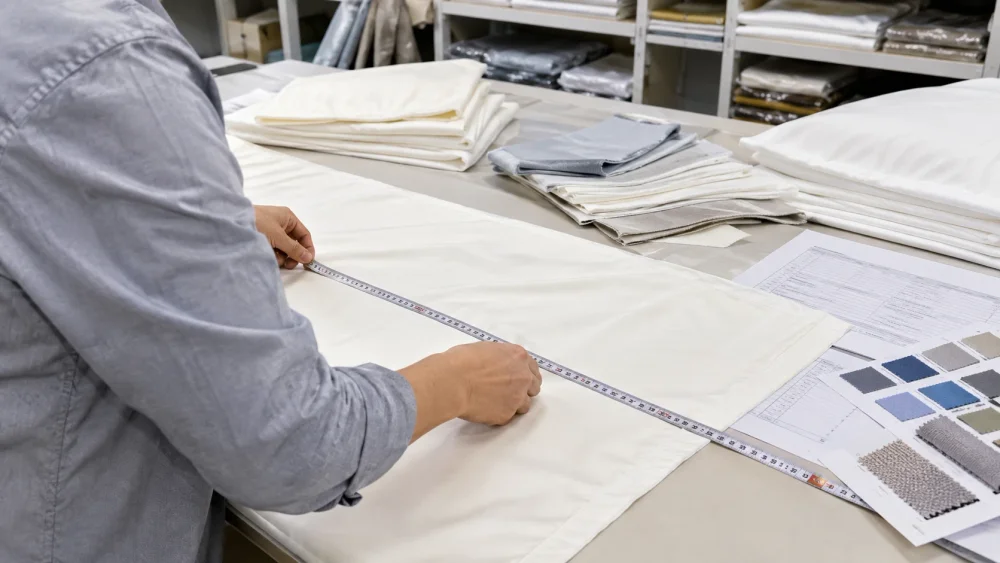
Measurement Inspection
Incorrect dimensions are one of the easiest defects to miss visually and one of the most frustrating for the end customer. Every finished product should be checked against the approved technical specification.
Flat Sheets
Confirm finished length and width, edge construction and the permitted size tolerance after finishing.
Fitted Sheets
Check mattress compatibility, pocket depth, elastic quality and whether the elastic is attached consistently around the sheet.
Duvet Covers
Verify finished dimensions together with zipper, button, flap or other closure construction.
Pillow Covers
Confirm size, opening construction, seam position and overall shape against the approved specification.
Include Shrinkage in the Size Decision
A product that measures correctly before washing may still fail after use if dimensional stability has not been controlled. Hospitality and institutional buyers should pay particular attention to post wash measurements.
Stitching and Workmanship Inspection
Good fabric does not compensate for poor sewing. Workmanship affects both product appearance and how long the bedding survives repeated use and laundering.
Colour and Finishing Inspection
Colour variation becomes especially visible when several units are displayed together in retail or used within the same hotel room. Bulk production should therefore be checked against the approved shade or lab dip.
Shade Matching
Compare bulk production with the approved colour reference and review variation between pieces and production batches.
Colourfastness
Review resistance to washing and rubbing, especially for dark colours, prints and bedding intended for repeated laundering.
Fabric Finish
Confirm softness, surface appearance, wrinkle behaviour and final hand feel against the approved sample.
Textile Testing Requirements for Bedding
The testing program should reflect the product, buyer requirement and destination market. Third party testing is particularly useful when fibre claims or performance requirements need independent verification.
| Test | Purpose | Buyer Relevance |
|---|---|---|
| Fibre composition | Confirms the actual material content | Important for labelling, private label claims and compliance |
| Dimensional stability | Measures shrinkage after laundering | Critical for sheets and hospitality products that must retain size |
| Colourfastness | Checks colour resistance to washing and rubbing | Helps prevent fading and colour transfer complaints |
| Pilling resistance | Evaluates surface appearance after wear | Useful for products where long term appearance matters |
| Fabric strength | Measures resistance to physical stress | Helps assess suitability for commercial or repeated use |
| Seam strength | Evaluates sewn construction | Relevant for high wash cycle hospitality programs |
| GSM | Confirms fabric weight | Supports comparison between production and approved specification |
How AQL Inspection Works for Bedding Shipments
Many international buyers use AQL, or Acceptable Quality Limit, as part of final textile inspection. Instead of checking every piece, the inspector selects a statistical sample from the finished order and records the defects found.
Critical Defects
Serious safety, compliance or product integrity problems such as contamination or incorrect material claims.
Major Defects
Problems that affect usability or customer acceptance, such as incorrect dimensions, broken closures or significant stains.
Minor Defects
Smaller appearance issues that do not normally prevent the product from being used, such as minor finishing irregularities.
The buyer and supplier should agree the defect categories and acceptance limits before production. The inspection standard should not be introduced only after a quality dispute begins.
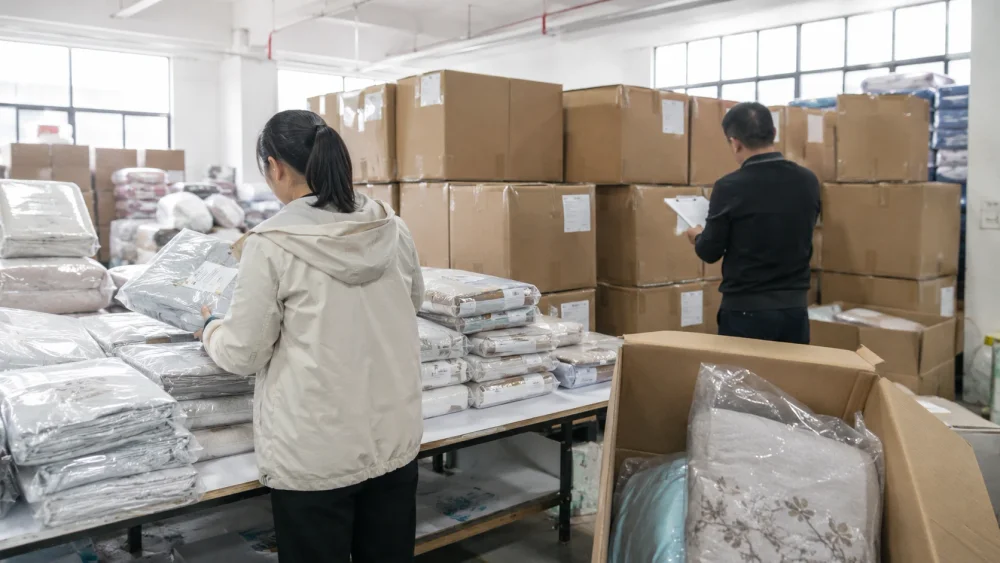
Packaging and Export Shipment Inspection
Product quality can still be lost during international transport if packaging is weak, labelling is incorrect or carton quantities do not match the packing list.
Individual Packing
Confirm folding, polybag quality, retail inserts, labels, barcode placement and any private label presentation requirements.
Carton Inspection
Check carton strength, dimensions, pieces per carton, gross and net weight where required, and shipping marks.
Export Documents
Review the commercial invoice, packing list, required certificates and shipping documentation before dispatch.
Packaging Is Part of the Product Specification
Importers should approve packaging during sampling rather than waiting until the order is ready to ship. Repacking finished goods can delay dispatch and create additional cost.
Why Source Bedding From India?
India has an established textile ecosystem covering cotton, spinning, weaving, processing, printing, stitching, finishing and export production. This gives international bedding buyers access to suppliers across different product levels and specifications.
The advantage is not simply production capacity. Experienced Indian exporters are familiar with international buyer specifications, sampling, inspection, private label requirements and export documentation.
Manufacturing Flexibility
Buyers can develop cotton bedding, hotel linen, blended fabrics, custom sizes, colours, prints and private label packaging based on the intended market.
Export Readiness
Experienced suppliers understand inspection requirements, carton markings, buyer documentation and the importance of maintaining consistency across bulk orders.
A capable supplier still needs a clear inspection process. Strong manufacturing and strong buyer specifications work together.
Set the Quality Standard Before Production Starts
Costita helps importers define bedding specifications, sourcing requirements and supplier expectations before bulk procurement begins.
Buyer Shipment Approval Checklist
The final inspection should bring the complete specification together. The buyer should be able to answer each of the following before releasing the shipment.
Fabric and Construction
Measurements
Workmanship and Finish
Packaging and Shipment
Common Quality Control Mistakes
Approving Only a Physical Sample
A sample without a written specification leaves too much room for interpretation. Material, dimensions, testing and packaging should all be documented.
Checking Appearance Only
A product can look acceptable and still fail after washing. Measurements, shrinkage, fibre content and workmanship need technical verification.
Comparing Suppliers Only by Price
A lower quotation can come from lighter fabric, different composition, weaker stitching or reduced finishing. Supplier prices should only be compared against the same specification.

Frequently Asked Questions
What should importers check before buying bulk bedding?
Importers should verify fibre composition, fabric construction, dimensions, stitching, colour performance, shrinkage, testing requirements, packaging and final shipment inspection standards before production is approved.
How should bedding quality be inspected before shipment?
A strong process combines supplier evaluation, approved samples, production monitoring and final inspection. The shipment should be checked against the same written specification used to approve production.
What is AQL in bedding inspection?
AQL is a statistical inspection method used to assess a sample from a production lot. Defects are classified by severity and the results are compared with agreed acceptance limits before the shipment is approved.
What defects should fail a bedding shipment?
Serious specification failures such as incorrect fibre claims, major contamination, incorrect dimensions, significant stains, broken closures or widespread stitching problems should be treated as major quality concerns. The buyer should define rejection criteria before production.
What tests are commonly used for cotton bed sheets?
Common tests include fibre composition, dimensional stability, colourfastness, fabric strength, pilling resistance and seam strength. The exact testing program depends on the destination market and buyer requirement.
How can importers evaluate bedding suppliers in India?
Buyers should review production capability, export experience, quality systems, sample consistency, certifications where relevant and the supplier's ability to meet the required specification and inspection process.
Should every piece in a bedding shipment be inspected?
Not necessarily. Bulk inspections commonly use statistically selected samples, although the inspection level should match the order size, buyer risk level and product requirements.
Final Buyer Takeaway
Bedding quality control should not begin when the cartons are already waiting for shipment. It starts with supplier evaluation, a clear specification and an approved sample.
From there, fabric, measurements, workmanship, testing, packing and final inspection should all follow the same buyer approved standard.
The Procurement Rule
A reliable bedding supplier is important, but supplier capability alone does not protect the buyer. Clear specifications and a structured inspection process are what turn production quality into repeatable shipment quality.
Inspect Before You Import
Costita helps buyers source bedding around defined specifications, quality expectations and export requirements so bulk orders are easier to compare and control.