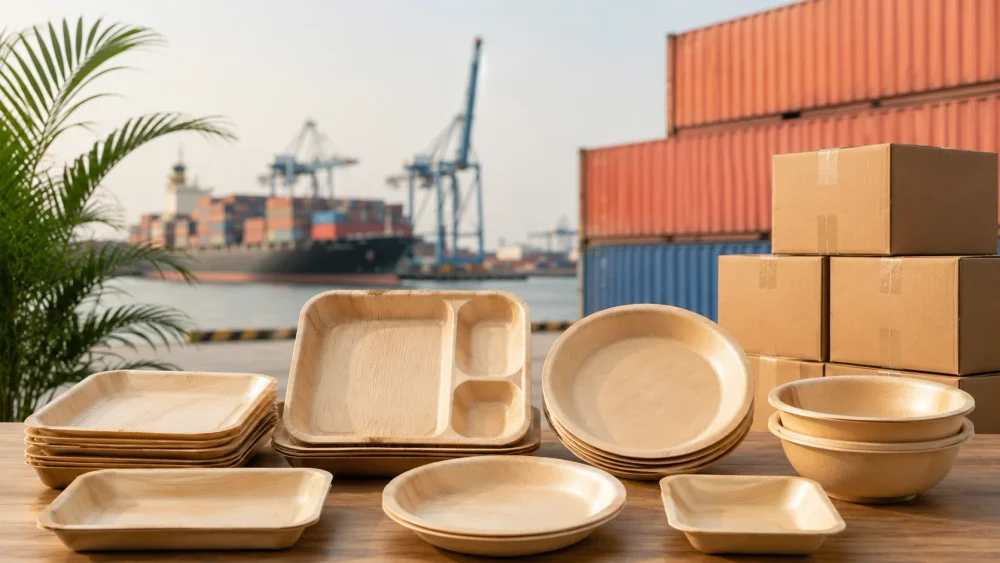
How to Import Areca Palm Leaf Products from India: The Complete Buyer's Guide (2026)
Importing areca palm leaf products from India involves much more than finding a manufacturer and comparing the price of a plate. Importers, wholesale distributors, hospitality suppliers, retail procurement teams and private label brands must evaluate market eligibility, product specifications, natural quality variation, minimum order quantities, packing efficiency, factory capacity, food contact evidence and shipping responsibility before confirming a commercial order.
A supplier may offer an attractive unit price but still create expensive problems if commercial production does not match the approved sample, export cartons cannot withstand international transport or shipment documents do not meet the requirements of the destination market. The useful buying question is not simply which supplier offers the lowest quotation. It is which supplier can deliver the correct product, quantity, packing, documents and production standard within the agreed commercial terms.
This guide explains the complete sourcing process from India, including buyer preparation, product selection, supplier verification, quotation comparison, sample testing, destination compliance, landed cost, private label packing, payment terms, production control, shipping, documentation and pre-shipment inspection.
Buyers who are still comparing product types, profiles and dimensions should first review Costita's complete areca palm leaf product guide before preparing a supplier enquiry.
Buyer starting point
Confirm the destination country, intended food application, required sizes, estimated quantity, packing format and compliance requirements before requesting quotations. Review the Costita areca palm leaf product range to compare commercial formats before preparing your RFQ.
Explore the Complete Import Guide
International Buyer ResourceQuick buyer answer
How to import areca palm leaf products from India
Confirm market eligibility, define the exact products, verify the supplier, test representative samples and record the commercial, quality and shipping responsibilities before production begins.
Confirm Market Access
Check whether the product and its intended food use can legally enter and be sold in the destination country.
Define the Product
Confirm the shape, dimensions, depth, pack count, intended application and expected order quantity.
Verify and Test
Review the production facility and test samples from the grade intended for the commercial order.
Control the Order
Record the price, payment stages, inspection method, packing, Incoterm and documents in writing.
Critical United States import update
United States buyers must review the current FDA position before sourcing Areca catechu dinnerware
In May 2025, the United States Food and Drug Administration informed retailers, distributors and importers that dinnerware made from the leaf sheath of the Areca catechu palm may not lawfully be offered for sale in the United States. The notice covers products such as plates, bowls, cups and cutlery.
The FDA states that naturally occurring alkaloids may migrate from the material into food under intended conditions of use. The agency also states that no current authorisation exists for this food contact application.
Import Alert 23-15 currently allows relevant foodware shipments to be detained without physical examination. A general supplier statement, an old customs clearance or wording such as FDA approved should not be accepted as evidence that a new shipment can lawfully enter the market.
United States buyer decision
Confirm the legal import route before requesting commercial prices
Current status
FDA Import Alert 23-15 applies to relevant foodware made from Areca catechu palm leaves.
Buyer action
Obtain current written regulatory advice before approving a supplier, sample or commercial order.
Importer note: The United States position does not automatically determine whether areca tableware can be sold in Europe, the United Kingdom, the Middle East, Australia, Africa or Asia. Every buyer must review the current rules of the actual destination market before confirming an order.
India Export Context for International Areca Product Buyers
India offers international buyers access to an established export economy supported by manufacturers, banks, freight forwarders, ports, customs systems and export documentation services. India’s total merchandise and services exports were estimated at US$860.09 billion during the 2025 to 2026 financial year, compared with US$825.26 billion in the previous financial year.
This wider trade figure should not be presented as the export value of areca palm leaf tableware. Finished palm leaf products do not always appear as one dedicated category in international customs databases. Classification may vary according to the product description, material interpretation and destination customs authority.
Buyers should ask their destination customs broker to confirm the correct classification before shipment. Copying an HS code from a supplier catalogue, marketplace listing or unrelated invoice may create duty, documentation and clearance problems.
Wider export system
Established Trade Infrastructure
Indian exporters operate within a large trade system supported by ports, financial institutions, customs and freight providers.
Product classification
Confirm the Correct HS Code
Classification should be checked using the actual product construction, material description and destination rules.
Market data caution
Review the Data Method
Precise market totals should explain the customs codes, products, countries and reporting period included.
Buyer responsibility
Verify Before Shipment
Confirm classification, duties, destination documents and clearance requirements before dispatch.
| Trade Question | Reliable Buyer Approach | Risk of Skipping the Check |
|---|---|---|
| What is the correct HS code? | Ask the destination customs broker to classify the actual finished product. | Incorrect duty, document amendments, inspection or customs delay. |
| How large is the export category? | Review the source methodology, customs codes, period and products included. | Planning based on misleading or overly broad market estimates. |
| Which documents are required? | Confirm the final document list with the importer, broker and relevant authority. | Customs delay, storage charges or a shipment that cannot be sold. |
India sourcing advantage
Why international buyers source areca palm leaf products from India
India is one of the main commercial production bases for areca palm leaf tableware because naturally shed raw material is available across major areca-growing regions and manufacturers have developed specialist knowledge in sorting, cleaning, drying, heat pressing, trimming, grading and export packing.
Manufacturing activity is concentrated mainly across Karnataka, Tamil Nadu, Kerala, Andhra Pradesh and Telangana. The production base includes specialist factories, larger manufacturing units, merchant exporters and procurement businesses that consolidate products from approved suppliers.
The commercial advantage is not limited to factory price. Buyers can compare multiple plate profiles, mould libraries, mixed product orders, retail packaging options, private label programmes and export services within one sourcing market.
India Areca Sourcing Profile
A practical overview for international procurement teams
Main regions
Karnataka, Tamil Nadu, Kerala, Andhra Pradesh and Telangana
Product scope
Plates, bowls, trays, platters and compartment formats
Order formats
Bulk cartons, mixed orders and retail-ready packs
Buyer segments
Importers, distributors, retailers and hospitality suppliers
Custom support
Labels, barcodes, printed packs and selected custom moulds
Main buyer risk
Variation between approved samples and commercial production
Commercial consideration: India offers many supplier options, but quality, capacity and export capability vary between factories. Buyers should verify the exact production location instead of assuming that every supplier within a manufacturing region follows the same process.
Raw Material Access
Production regions have access to naturally shed areca palm leaf sheaths that can be collected, sorted and processed into commercial food-service products.
Manufacturing Experience
Manufacturers offer established mould libraries, pressing capacity and experience across shallow, deep and compartment product profiles.
Product Flexibility
Buyers can source standard sizes, mixed ranges, custom labels, barcodes, retail packs and selected private label programmes.
Export Coordination
Export partners can support invoices, packing lists, certificates, freight planning and shipment preparation.
Compare Actual Product Profiles Before Preparing the Import Enquiry
Buyers should compare more than one product profile before approving a supplier. A shallow dinner plate, deep plate, compartment plate and bowl have different moulding, nesting, packing and food-service requirements.
Reviewing actual product pages helps the buyer prepare clearer specifications and prevents one sample from being treated as evidence for the supplier's complete production range.
Round Shallow Plates
Suitable for standard meals, catering, buffets and food service where a wide usable surface and moderate rim are required.
Round Deep Plates
Designed for heavier portions and foods that need additional depth, stronger rim control and secure serving support.
Compartment Plates
Useful for institutional meals, buffets and catering where curries, rice, sides and desserts need clear separation.
Areca Bowls
Used for curries, rice dishes, salads, noodles and generous portions where capacity and base stability matter.
Areca or bagasse for your first food-service range?
Compare appearance, food applications, consistency, packing and buyer positioning before selecting one material for every use case.
Before contacting suppliers
Define the buying requirement before requesting quotations
Suppliers can only prepare accurate quotations when the buyer provides a clear commercial brief. A general request for areca plates normally leads to incomplete prices, unrelated product suggestions and repeated follow-up questions.
The first requirement document does not need to contain every technical tolerance, but it should explain what the buyer wants to purchase, how the products will be used or sold, where they will be delivered and whether custom packing or branding is required.
Buyers should also provide a realistic quantity range. A sample shipment, first commercial order and expected annual purchasing volume require different pricing, production planning and packaging arrangements.
Buyer Requirement Brief
Information required before a reliable quotation can be prepared
Product
Shape, size, depth, profile and compartment format
Quantity
Sample, trial order and commercial volume
Packaging
Bulk cartons, retail packs or private label
Destination
Country, port and final delivery location
Compliance
Food contact and market document requirements
Timing
Production completion and delivery schedule
| Requirement Area | Information to Provide | Why It Changes the Quotation |
|---|---|---|
| Product specification | Shape, dimensions, depth, compartments, intended food and reference images | Different moulds and profiles use different raw material, production time and carton space |
| Order quantity | Quantity per product, trial order volume and expected repeat demand | Volume affects unit price, production scheduling, packing and freight efficiency |
| Packing requirement | Inner count, retail pack, label, barcode, master carton and pallet preference | Printed and retail-ready packing adds material, artwork and setup costs |
| Destination market | Country, destination port, delivery location and intended sales channel | The destination affects compliance, documents, labels, freight and customs planning |
| Commercial terms | Preferred Incoterm, payment structure and target production date | Supplier responsibility and included costs change according to the selected term |
Manufacturer, Exporter or Trader: Understand Who Controls the Order
Not every company selling areca palm leaf products operates a factory. Some suppliers manufacture the products themselves, some consolidate production from partner factories and others purchase finished stock for resale.
None of these models is automatically unsuitable. The buyer needs transparency about where the products are manufactured, who controls quality, who prepares the shipment and which company accepts contractual responsibility when the completed order does not match the approved specification.
Primary Manufacturer
A primary manufacturer controls pressing, trimming, grading and packing at its own production facility. This structure normally gives the buyer better visibility into machines, moulds, capacity, quality control and corrective action.
Direct manufacturing can be useful for repeat orders, custom mould development, larger volumes and private label programmes requiring consistent production control.
Export Company
An export company may manufacture selected products and source other formats from approved partner factories. This model can support mixed product orders, shipment consolidation, documentation and freight coordination.
Buyers should ask which items are produced internally, which are subcontracted and how one quality standard is maintained across several production units.
Trading Company
A trading company purchases finished products and resells them. This may provide easier access to ready stock or several categories, but the buyer may have less visibility into the factory, moulds and production controls.
A trader should identify the manufacturing source, explain its inspection procedure and confirm how rejected goods or replacement production will be managed.
Supplier due diligence
How to verify an Indian areca palm leaf product supplier
Supplier verification should confirm whether the company can manufacture and deliver the agreed order. A registration certificate confirms that a company exists, but it does not prove that the company owns the factory shown in photographs or controls the quoted production capacity.
The buyer should connect the registered business, factory address, production team, quality procedure, bank beneficiary and export documents. When different companies are involved, the commercial relationship and responsibility must be explained before payment.
Confirm Business Identity
Match the legal name, registered address, tax information, exporter details and authorised contact with the quotation and contract.
Verify the Bank Account
The payment beneficiary should match the contracted entity unless a documented arrangement explains the difference.
Review the Factory
Request a live walkthrough covering raw material, pressing, trimming, rejected stock, finished goods and packing areas.
Confirm Normal Capacity
Ask for normal output, operational machines, available moulds, current commitments and peak-season capability.
Review Export Experience
Ask which markets the supplier serves and how it manages documents, inspections, Incoterms and freight coordination.
Validate Certificates
Confirm the legal entity, factory address, certificate scope, issuing body, validity and product relevance.
Important distinction: A factory management certificate does not automatically prove that the finished product satisfies food contact, compostability, labelling or import requirements in the buyer's destination country.
Build a Supplier Shortlist Based on Capability, Not Price Alone
Shortlist three to five suppliers and compare them using the same criteria. A supplier with a slightly higher unit price may provide stronger product control, better packing, more reliable communication and lower receiving losses.
Record what each supplier has demonstrated, not only what the sales representative has promised. Factory evidence, representative samples, written specifications and documented export experience carry more value than general marketing statements.
| Evaluation Area | What the Buyer Should Check | Why It Matters |
|---|---|---|
| Manufacturing control | Factory ownership, mould availability, subcontracting and production supervision | Determines who can investigate and correct a production problem |
| Product quality | Sample consistency, dimensions, trimming, odour, mould control and natural variation | Protects the quantity of products that remain saleable after arrival |
| Production capacity | Normal output, current workload, peak-season capacity and repeat-order capability | Helps the buyer plan inventory and customer delivery schedules |
| Export capability | Documents, packing, freight coordination, inspection and destination experience | Reduces shipment delays and customs documentation errors |
| Communication | Response quality, technical clarity, written confirmations and document control | Makes changes, approvals and corrective action easier to manage |
| Commercial value | Unit price, MOQ, packing efficiency, payment terms, lead time and included services | Produces a more reliable decision than selecting the lowest price alone |
Additional verification required
Supplier warning signs that should pause the buying process
One warning sign does not automatically prove that a supplier is unreliable. It does mean the buyer should pause the order and request stronger evidence before transferring money, approving artwork or authorising production.
Unexplained Low Pricing
The quotation is substantially below comparable offers without a clear difference in product weight, grade, packing or commercial scope.
Unclear Manufacturing Source
The supplier avoids showing the facility or cannot explain where the quoted products are manufactured.
Refusal to Provide Samples
The supplier pushes for a commercial order without allowing the buyer to inspect representative products and packaging.
Changing Bank Instructions
Payment instructions change unexpectedly or the requested beneficiary belongs to an unrelated person or company.
Unrealistic Production Time
The proposed lead time does not match the order quantity, custom packing requirement or stated factory capacity.
Vague Product Standards
The supplier uses terms such as premium quality or export grade but will not define dimensions, tolerances or defects.
Prepare a clearer sourcing enquiry
Compare the product, supplier and landed cost before confirming your order
Share the required products, quantities, destination and packing format. Costita can help organise a clearer enquiry and identify suitable product options for comparison.
Products
Shapes and sizes
Quantity
Trial or bulk
Destination
Country and port
Packing
Bulk or branded
Choose Your Next Step
Review available products or discuss your import requirement with Costita.


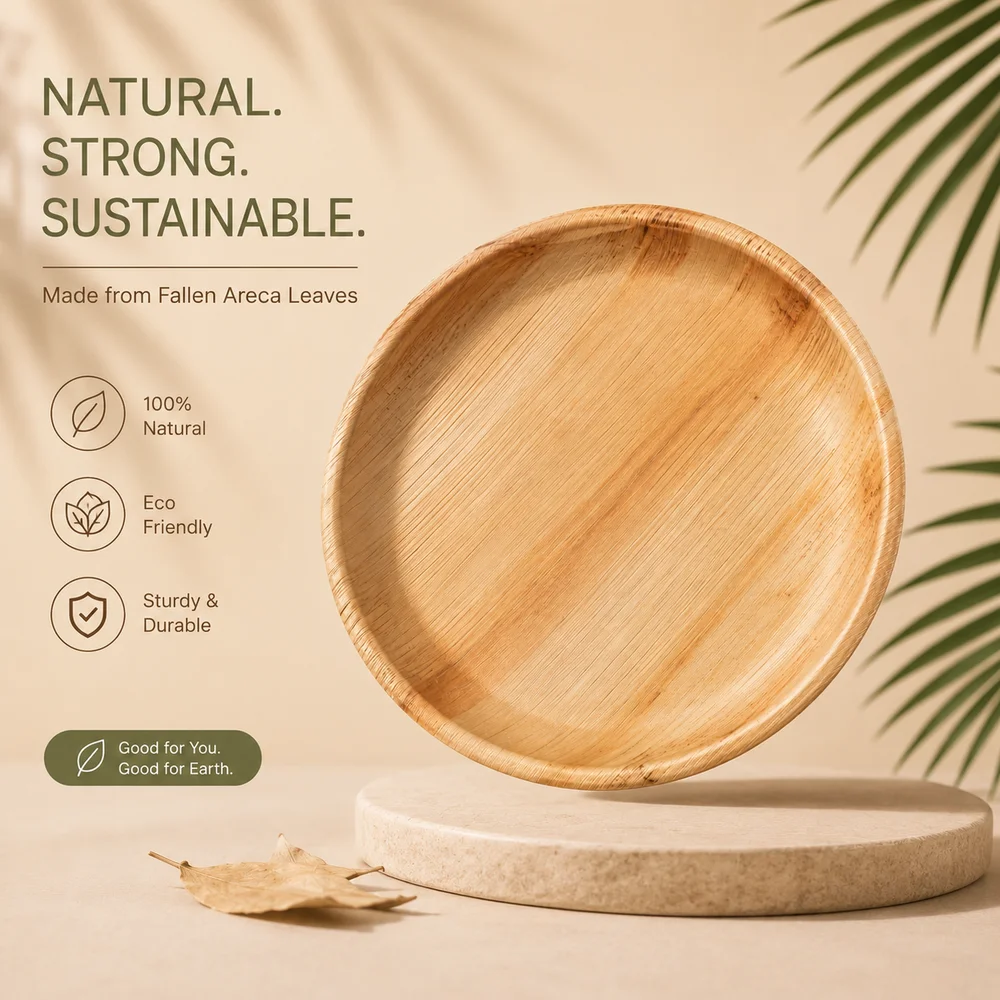
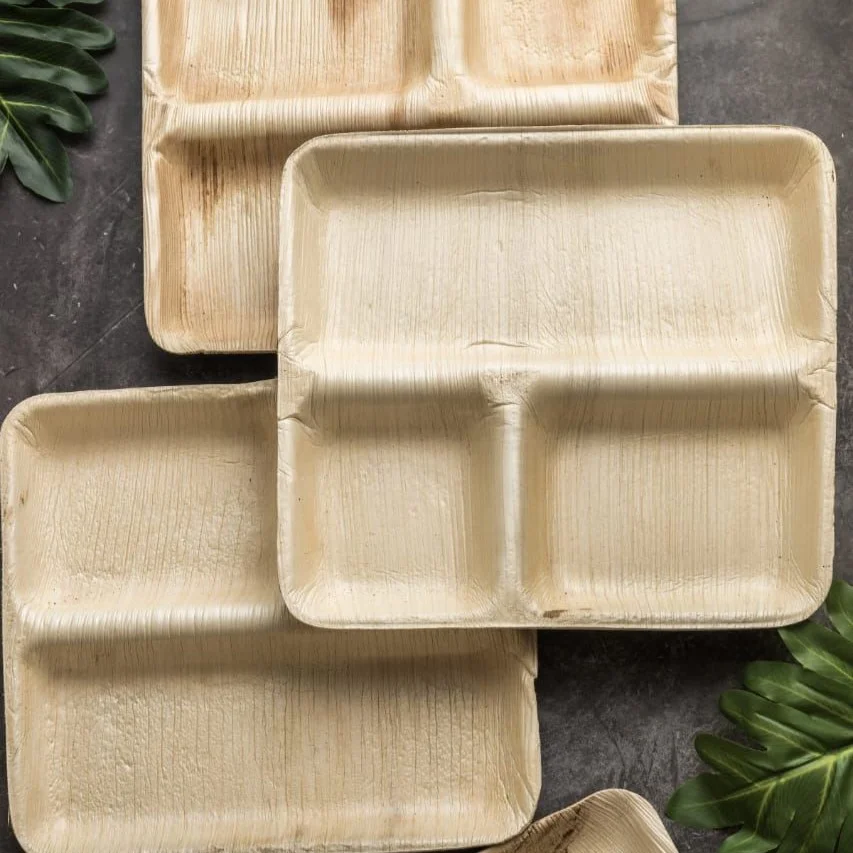
Square & Round Compartment Areca Palm Leaf Plate | Compartmented Deep 1.5 cms Profile |
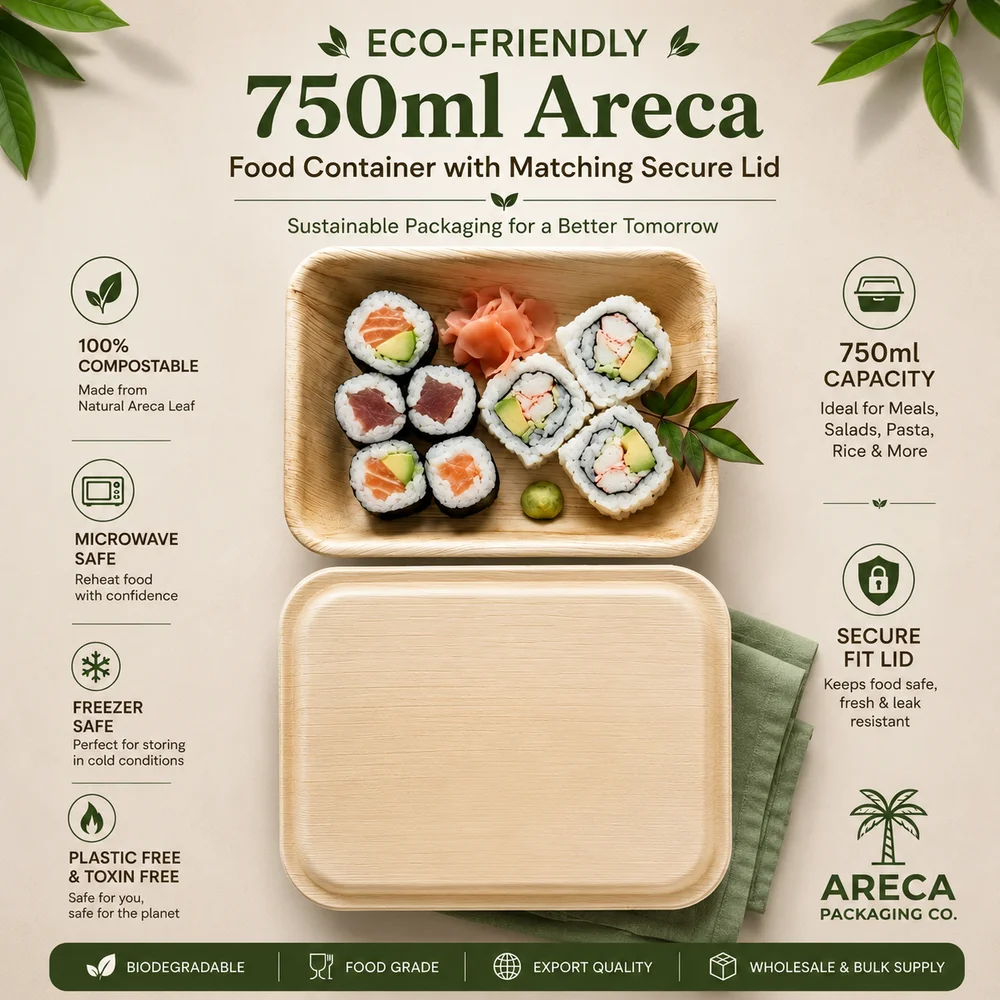
750ml Areca Palm Leaf Rectangle Food Container with Lid Biodegradable Food Storage Box
From quotation to compliance approval
Turn a supplier quotation into a controlled and measurable buying decision
After suitable suppliers have been shortlisted, the buyer must create a comparable RFQ, define the product standard, evaluate minimum order quantities, test physical samples, calculate landed cost and review destination-market evidence before approving production.
This stage converts general claims such as premium quality, export grade and food safe into written requirements that can be checked during production and pre-shipment inspection.
Buyer Navigation
RFQ, Samples and ComplianceRequest for quotation
Send Every Supplier the Same Detailed RFQ
A quotation can only be compared fairly when each supplier receives the same product, packing, quantity, destination and commercial requirements. A request that only says 10-inch plate, export quality and FOB price allows suppliers to quote different weights, depths, surface grades, pack counts and carton configurations.
Prepare one numbered RFQ and require every supplier to reply in the same sequence. The completed document should make it possible to compare product price, MOQ, production time, packaging, shipment volume, payment terms and exclusions without relying on separate messages.
Six-Part RFQ Structure
Each section closes a different commercial or technical information gap.
Product Details
State the shape, dimensions, depth, number of compartments, intended food use and required product reference.
Quantity by Item
List the required quantity for each size instead of providing only the combined order quantity.
Packing Format
Confirm inner packs, master cartons, labels, retail packs, barcodes, pallets and shipping marks.
Destination Market
Identify the country, destination port, final delivery location and intended sales channel.
Compliance Evidence
List the material declarations, test reports, traceability records and certificates required for review.
Commercial Terms
Request currency, MOQ, lead time, Incoterm, payment stages, sample cost, inspection terms and exclusions.
| RFQ Field | Information to Request | Comparison Purpose |
|---|---|---|
| Product price | Unit price by product, size, quantity tier and currency | Prevents one blended price from hiding expensive or low-volume items |
| MOQ | MOQ per size, total order MOQ and mixed-product conditions | Shows whether the proposed assortment can be ordered commercially |
| Carton details | Pieces per carton, dimensions, net weight and gross weight | Supports freight, storage and landed-cost calculations |
| Production time | Sample time, packaging approval time and bulk completion time | Separates manufacturing time from freight and customs time |
| Exclusions | Testing, inspection, local transport, documentation, printing and freight charges | Prevents hidden costs from appearing after supplier selection |
Recommended buyer scorecard
Weight Supplier Capability Before Comparing the Final Price
The lowest unit price should not automatically receive the highest supplier score. Product quality, market compliance, manufacturing control and export capability determine whether the quoted goods can be received, sold and reordered reliably.
The bar graph below is a suggested Costita evaluation model for supplier shortlisting. It is not an industry benchmark. Buyers can change the weighting according to their market, product risk and internal procurement policy.
Scorecard principle
A supplier should not pass the commercial review if a serious compliance, payment or product-safety concern remains unresolved, even when its total weighted score appears competitive.
Suggested Supplier Evaluation Weighting
Total recommended score: 100 points
Product Quality
25%Compliance Evidence
20%Manufacturing Control
20%Export Capability
15%Packing and Logistics
10%Price and Terms
10%Quality, compliance and manufacturing control account for 65 of the suggested 100 points because failures in these areas can affect saleability, customs clearance and repeat supply.
Written product standard
Define Acceptable Natural Variation and Unacceptable Defects
Areca leaf tableware is manufactured from a natural agricultural material. Colour, grain and fibre patterns will vary between pieces. The purpose of the specification is not to make every product look identical. It is to define a commercially acceptable range while rejecting defects that affect food use, hygiene, handling, packing or retail presentation.
The approved specification should be linked to a signed or photographed reference sample. Statements such as Grade A, premium finish and export quality should not replace dimensions, tolerance limits, defect definitions and packing requirements.
Layer 01
Finished Dimensions
Record diameter, length, width, depth, compartment size and permitted tolerance.
Layer 02
Product Construction
Define the required thickness, weight, rigidity or performance range where commercially relevant.
Layer 03
Surface Standard
Define acceptable grain, colour range, natural marks, polishing, edge trimming and burn marks.
Layer 04
Performance Standard
Identify the intended food, serving temperature, holding period and handling conditions.
Layer 05
Defect Standard
Define mould, odour, cracks, holes, sharp fibres, severe warping and incomplete trimming.
Layer 06
Packing Standard
Record inner quantity, carton quantity, protection, label content, shipping marks and pallet plan.
Usually Acceptable When Defined
Natural fibre patterns within the approved visual range
Moderate colour variation that does not indicate mould or burning
Minor surface marks that do not affect strength or hygiene
Small dimensional movement within the written tolerance
Reject or Investigate
Mould spots, dampness or strong fungal odour
Cracks, holes or edges that reduce strength
Severe warping that prevents stable placement or nesting
Incorrect count, dimensions, label or carton identification
Compare Live Product Specifications
Buyers can review how dimensions, packing, MOQ and production timelines differ between Costita product profiles before preparing the final specification.
Minimum order planning
Use MOQ to Balance Inventory Risk, Freight Efficiency and Production Setup
MOQ is influenced by the product profile, mould availability, production setup, inner packing, printed materials and whether several sizes can be combined. A standard bulk-packed product may have a lower entry quantity than a custom product supplied in printed retail packaging.
The smallest available order is not automatically the best commercial trial. Very small shipments can carry high freight, handling and customs costs per piece. The buyer should compare the cash commitment with the final landed cost and expected sales period.
Stage 01
Technical Sample
Used to test dimensions, finish, strength, odour, food performance, stacking and packing.
Main objective
Confirm whether the product is suitable for commercial evaluation.
Stage 02
Commercial Trial
Large enough to test customer demand, warehouse handling, transit performance and final margin.
Main objective
Learn from real market performance without creating excessive stock.
Stage 03
Repeat Order
Planned using verified sales, customer feedback, reorder time and supplier performance.
Main objective
Improve pricing and freight efficiency while maintaining stock availability.
| MOQ Factor | Lower MOQ Situation | Higher MOQ Situation |
|---|---|---|
| Product design | Existing standard mould | New or dedicated custom mould |
| Packing | Standard bulk carton | Printed retail pack with custom materials |
| Order mix | Supplier permits mixed standard sizes | MOQ must be met separately for every item |
| Printed materials | Generic label or plain carton | Custom sleeves, cartons, barcodes or multilingual labels |
Commercial cost control
Calculate Landed Cost Per Saleable Piece
Factory price is only one part of the buying cost. The importer may also pay for packaging, inland transport, inspection, documentation, freight, insurance, customs clearance, duties, taxes, destination handling, warehousing and local delivery.
The final calculation should divide the complete landed cost by the quantity that can actually be sold. Missing pieces, damaged cartons, breakage, mould, rejected retail packs and customer returns can increase the effective cost per saleable unit.
Buyer calculation
Landed Cost Per Saleable Piece
Total product and import cost
Total saleable pieces received
Do not divide by
The ordered quantity when the receiving inspection identifies damage, shortage or unsaleable products.
Cost 01
Factory Cost
Product, moulds and printed packing
Cost 02
Origin Cost
Inland transport, documents and inspection
Cost 03
Main Freight
Ocean or air freight and insurance
Cost 04
Destination Cost
Customs, duty, tax and local delivery
Cost 05
Product Loss
Damage, shortage and unsaleable stock
Physical product approval
Test Samples Under the Conditions Customers Will Actually Use Them
A catalogue confirms appearance but cannot confirm performance. Request samples from the production source expected to manufacture the commercial order and test them using the food, temperature, carrying method and holding period expected in the target market.
Keep one approved sample as the reference standard. Record photographs, measurements and test results so the supplier, buyer and inspection company use the same basis when evaluating production.
Measure the Product
Check diameter, length, width, depth, thickness, weight and dimensional consistency.
Inspect the Finish
Review colour, grain, mould, odour, cracks, holes, trimming, fibres, warping and stacking.
Test Food Performance
Use relevant hot, cold, oily, wet and acidic foods for the intended holding period.
Approve the Reference
Sign, label and retain the approved sample with photographs and written acceptance notes.
| Test Area | Suggested Check | Warning Sign |
|---|---|---|
| Dry food | Check strength, edge comfort, stability and stacking | Cracking, rocking or sharp exposed fibres |
| Oily food | Observe staining, softening and leakage during service | Rapid absorption or weakened structure |
| Moist food | Test for the expected holding time and temperature | Deformation, leakage or separation of fibres |
| Carrying test | Lift and carry the normal meal weight using expected handling | Excessive bending, instability or edge failure |
| Pack opening | Count products and inspect dust, odour, breakage and separation | Incorrect counts, dampness, damage or products stuck together |
Claims control
Do not publish microwave-safe, oven-safe, freezer-safe, chemical-free, compostable or food-contact claims only because they appear in a supplier catalogue. Confirm the intended use, evidence and destination-market requirements before using the claim.
Areca-specific quality control
Inspect the Risks Created by Natural Material, Moisture and Long-Distance Shipping
Areca products require controls designed for natural leaf material. Incomplete drying, humid storage, weak packaging and poor container preparation may create problems that are not visible when production first leaves the press.
Every major defect should have a written definition, inspection method and agreed corrective action. This prevents the supplier from dismissing serious quality issues as normal natural variation.
Moisture and Mould
High RiskIncomplete drying or humid storage can create odour, fungal marks and staining during transit.
Buyer control
Review storage, product dryness, packing condition and moisture protection before loading.
Cracks and Holes
PerformanceWeak material selection, pressing conditions and carton compression can create visible or hidden breakage.
Buyer control
Inspect random pieces from several cartons and define zero-tolerance defects clearly.
Severe Variation
Visual RiskBurn marks, dark spots, holes and major colour changes may exceed the approved visual standard.
Buyer control
Use approved photographs showing acceptable, borderline and rejected examples.
Strong Odour
HygieneDamp, mould, smoke or chemical odour should not be accepted as a normal characteristic.
Buyer control
Open several sealed packs and record the odour assessment during inspection.
Warping and Nesting
HandlingPoor formation can make plates unstable, difficult to separate or inefficient to pack.
Buyer control
Test flatness, rocking, stack height and product separation.
Count and Packing Loss
CommercialIncorrect counts, hidden cracks and crushed cartons reduce the quantity available for sale.
Buyer control
Count selected packs, verify carton totals and complete receiving inspection after arrival.
Destination-market review
Natural and Plastic-Free Claims Do Not Replace Food-Contact Compliance
A product manufactured from a plant-based material may still require evidence that it is suitable for its intended contact with food. The importer should identify the applicable market rules, test conditions, declarations, labelling duties and packaging responsibilities before approving bulk production.
Certificates should be reviewed as evidence, not automatic permission to sell. Confirm that each report identifies the correct material, product, factory, test method, date and intended market.
European Union
Food-Contact Framework
Food-contact materials placed on the EU market must meet the general safety and inertness principles of Regulation EC 1935/2004.
Manufacturing must also be reviewed against the applicable Good Manufacturing Practice requirements.
United Kingdom
Product and Packaging Duties
Restrictions on selected single-use plastic items may increase demand for non-plastic alternatives, but the imported product must still satisfy food-contact and labelling requirements.
Businesses placing packaged products on the UK market should also determine whether packaging EPR registration, reporting or fees apply.
Other destinations
Local Market Verification
UAE, Saudi Arabia, Australia, Singapore, African and other Asian markets may apply separate food-contact, customs, labelling and packaging rules.
Confirm the requirements with the importer, customs broker and relevant local authority before approving the specification or artwork.
Buyer instruction
Provide the destination country to the supplier before requesting test reports or declarations.
| Evidence | What to Verify | Common Error |
|---|---|---|
| Material declaration | Material identity, composition, production source and traceability | Accepting a one-line natural product statement without supporting details |
| Test report | Product, material, laboratory, method, conditions, date and result | Using a report for another factory, product or material |
| Factory certificate | Legal entity, factory address, certificate scope, issuer and validity | Treating a management certificate as proof of every product claim |
| Traceability record | Production batch, date, factory, item code and carton identification | Receiving cartons that cannot be connected to production records |
| Market assessment | Current route for import, food use, sale, packaging and labelling | Assuming a previous shipment proves current legal eligibility |
Compliance checkpoint
Do not release the commercial order only because the supplier has sent several certificates. First confirm that the documents apply to the actual product, factory, intended food use and destination market.
Ready for production planning
The supplier should not begin bulk production until the commercial and technical reference is complete
The final approval pack should contain the quotation, product specification, approved sample, packing method, market evidence, landed-cost estimate, purchase quantity and agreed inspection conditions.
Approval Checklist
Comparable supplier quotation
Written product specification
Approved physical sample
Destination compliance review
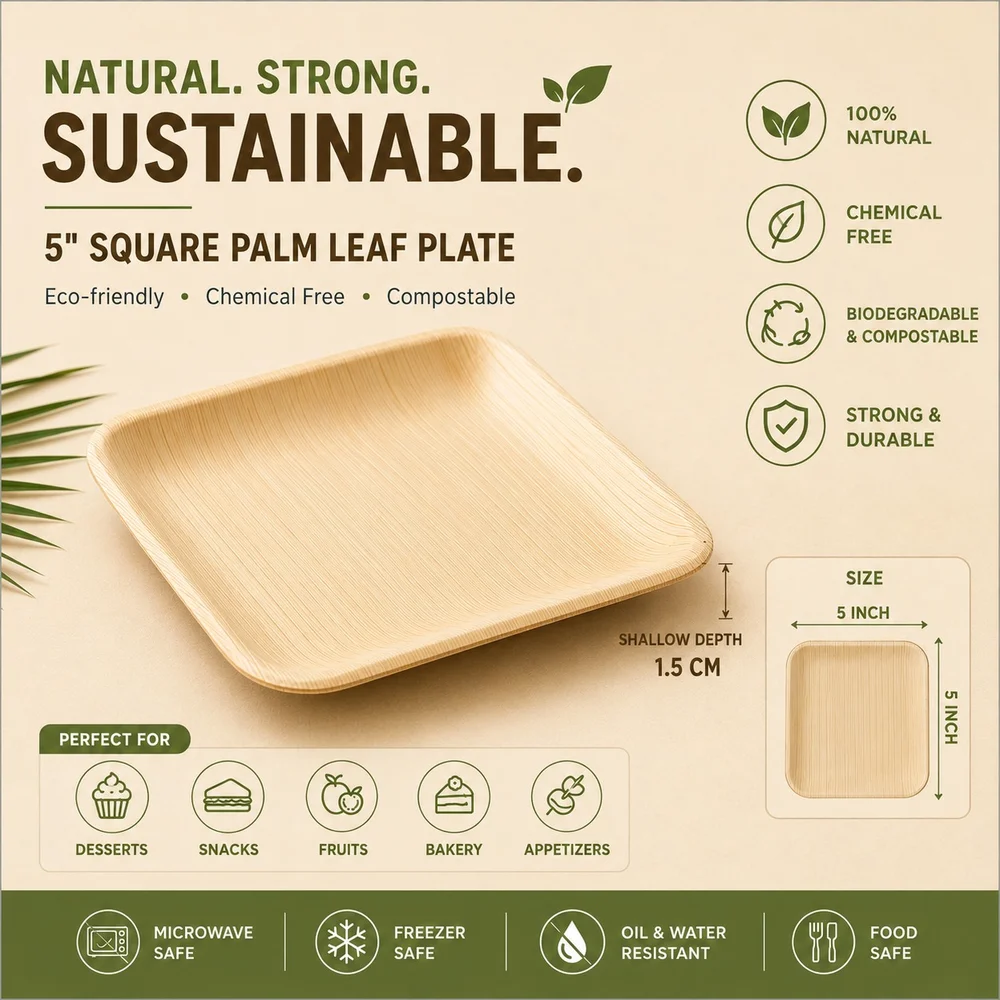
Square Areca Palm Leaf Plates 5 to 10 Inch Serving Collection Biodegradable Tableware
From purchase order to final delivery
Control production, payment, packing, inspection and shipment before the order leaves India
Supplier approval and sample testing do not complete the import process. Buyers must convert every commercial promise into a purchase order, production schedule, packing instruction, document checklist, inspection standard and clearly allocated shipping responsibility.
This stage protects the buyer against unauthorised product changes, incomplete documents, weak export packing, missed production milestones and destination-side disputes.
Shipment Navigation
Production, Packing and DeliveryContractual order control
Convert the Approved Quotation and Sample into a Detailed Purchase Order
The purchase order should bring the complete commercial agreement into one controlled document. It should not depend on information spread across quotations, emails, messaging applications, photographs and verbal calls.
Every product should have a clear item code, description, quantity, unit price, specification reference, packing method and delivery term. The buyer should also record what happens when production is delayed, inspection fails or the supplier proposes a material or packaging change.
Purchase Order Control Map
Each block should be agreed before the supplier accepts the order.
Product Reference
Item code, dimensions, profile, approved sample and specification version.
Commercial Value
Quantity, unit price, currency, total value, taxes and included services.
Quality Conditions
Tolerances, defect limits, inspection method and corrective action.
Delivery Conditions
Completion date, Incoterm, named place, documents and shipping responsibility.
| Purchase Order Field | Information to Record | Buyer Protection |
|---|---|---|
| Product and grade | Exact item, profile, dimensions, surface standard and approved sample | Prevents substitution with a cheaper or different production grade |
| Packing | Inner count, master carton, labels, barcode, pallet and shipping marks | Reduces count, branding and destination handling disputes |
| Production schedule | Artwork approval, material preparation, bulk completion and inspection dates | Gives the buyer clear checkpoints before the required delivery date |
| Payment stages | Deposit, milestone payment, balance conditions and bank charges | Connects payment release to evidence and order progress |
| Change control | Written approval required for product, material, factory, packing or schedule changes | Prevents unauthorised changes after the order has started |
Commercial risk management
Link Payment Release to Supplier Verification and Order Evidence
Payment terms should reflect the order value, supplier relationship, product customisation and evidence available to the buyer. A first order with custom packaging and an unfamiliar supplier normally requires more control than a repeat order with a documented performance history.
Before every transfer, confirm the beneficiary name, bank details, invoice number and payment purpose through an independently verified contact. Unexpected changes to bank instructions should pause the payment process until the new information is authenticated.
Payment gate 01
Supplier Verified
Legal identity, factory role and bank beneficiary have been confirmed.
Payment gate 02
Order Accepted
The supplier has accepted the purchase order, specification and schedule.
Payment gate 03
Production Evidenced
Progress photographs, reports or an approved production sample confirm order status.
Payment gate 04
Shipment Released
Inspection, packing and required document conditions have been completed.
Payment warning
Do not release payment only because a proforma invoice appears professional. Match the invoice, supplier entity, bank account, purchase order and authorised contact before transferring funds.
Manufacturing visibility
Monitor Production Through Defined Milestones Instead of Waiting for the Final Completion Date
Production control does not require the buyer to manage the factory every day. It requires a small number of meaningful checkpoints that confirm the correct product, material, packaging and quantity are moving through the agreed process.
The supplier should communicate delays early enough for the buyer to adjust freight bookings and customer commitments. A production delay becomes more expensive when it is only disclosed after the planned inspection or vessel cut-off date.
Production Control Timeline
Approvals should move in sequence so later work does not begin using unapproved information.
Order Confirmation
Supplier confirms the specification, quantity, price, schedule and payment terms.
Material Preparation
Suitable raw material, packaging components and approved labels are prepared.
Initial Production
Early output is checked against the approved sample before full production continues.
Bulk Manufacturing
Quantity, finish, rejection control and production progress are monitored.
Final Packing
Products are counted, sealed, labelled, packed and prepared for inspection.
Shipment Release
Inspection findings, documents and freight arrangements are confirmed.
Buying for Restaurants or Catering Companies?
Food-service buyers can review Costita's detailed guide to product selection, samples, MOQ, packing and repeat supply for restaurant and event requirements.
Read the Bulk Food-Service Sourcing GuideProduct and transit protection
Design Export Packing for Moisture, Compression, Handling and Warehouse Conditions
Areca products are lightweight but occupy substantial carton volume. Efficient nesting is important, but packing must also protect the products from humidity, dust, compression, movement and rough handling during international transport.
Packing decisions should consider the route, transit time, climate, container loading method and destination warehouse. Stronger cartons, liners, sealed inner bundles, desiccants or palletisation may be appropriate when supported by the shipment risk assessment.
Five-Layer Export Packing System
Each layer protects the product against a different transit risk.
Layer 01
Correct Nesting
Products are aligned and counted to limit movement and pressure points.
Layer 02
Sealed Bundle
Inner packaging protects the immediate stack from dust and moisture exposure.
Layer 03
Master Carton
Carton strength is selected for stacking, handling and the expected route.
Layer 04
Load Protection
Pallets, floor loading or internal restraint are planned around shipment economics.
Layer 05
Container Control
Cleanliness, dryness, stowage and moisture risks are reviewed before loading.
Bulk Export Packing
Suitable for distributors, hospitality suppliers and buyers who will repack or sell products in larger commercial quantities.
Lower printed-material setup
Faster artwork approval
Importer-led repacking
Commercial carton quantities
Private-Label Packing
Suitable for retail brands and distributors that need consumer-ready bundles, labels, barcodes and market-specific information.
Approved artwork version
Correct pack quantity
Verified barcode quality
Destination label review
Review Product Formats Before Finalising Cartons
The number of pieces that fit into a carton changes with product shape, depth and nesting. Review the full areca product guide before applying one carton format across every item.
Wood packaging check
When solid-wood pallets or dunnage are used, confirm the destination requirements and whether the wood packaging must be treated and marked under ISPM 15.
Review Official IPPC StandardsShipping responsibility
Choose an Incoterm That Matches the Buyer's Logistics Capability and Cost Visibility
An Incoterm allocates specific delivery, cost and risk responsibilities between the buyer and seller. It does not replace the sales contract, product specification, payment terms or destination compliance requirements.
The selected term should include the correct named place or port. Buyers should also confirm who arranges export clearance, main freight, insurance, destination handling, import clearance and final delivery.
| Term | Seller Scope | Buyer Scope | Planning Consideration |
|---|---|---|---|
| EXW | Makes goods available at the named location | Manages most transport, clearance and risk responsibilities | Requires strong origin-country logistics capability |
| FCA | Delivers cleared goods to the agreed carrier or location | Controls main transport and destination activity | Can provide clearer responsibility for containerised shipments |
| FOB | Delivers goods on board at the named port | Controls ocean freight, insurance and destination activity | Confirm suitability with the freight forwarder for the shipment type |
| CIF | Arranges cost, insurance and freight to the named destination port | Manages destination charges, import clearance and delivery | Review insurance scope and destination charges separately |
| DAP | Arranges delivery to the named destination place | Manages import clearance, duty and taxes unless otherwise agreed | Requires accurate destination cost and importer-role planning |
Important
This table is a simplified planning aid. Buyers should review the current ICC Incoterms rules and confirm the selected term with their contract, freight and customs professionals.
Review Official ICC Incoterms GuidanceShipment documentation
Confirm the Final Document List Before Production and Freight Booking
Document requirements vary according to the destination country, product classification, payment method, shipping route and buyer agreement. The importer, customs broker and freight forwarder should confirm the final list before the shipment is dispatched.
Product descriptions, quantities, weights, values, consignee details and origin information should remain consistent across the commercial invoice, packing list, transport document and supporting certificates.
Commercial
Commercial Invoice
Records the seller, buyer, products, values, currency, terms and transaction details.
Packing
Packing List
Records carton quantities, dimensions, weights and product distribution.
Transport
Shipping Document
Bill of lading, sea waybill or air waybill according to the transport arrangement.
Origin
Certificate of Origin
Used where required to document the declared origin of the goods.
Product
Compliance Evidence
Relevant declarations, reports, batch records and product information.
Additional
Market-Specific Documents
Any certificates, declarations or permits required by the destination.
| Document Check | What Must Match | Common Problem |
|---|---|---|
| Product description | Purchase order, invoice, packing list and customs classification | Generic wording that does not clearly identify the goods |
| Quantity and weight | Carton totals, gross weight, net weight and shipment records | Different figures across invoice and packing documents |
| Buyer and consignee | Legal names, addresses, tax details and contact information | Incorrect consignee information delaying destination clearance |
| Shipment term | Incoterm, named place, freight booking and invoice terms | Unclear responsibility for destination charges or insurance |
Final quality verification
Inspect the Finished Order Before Releasing It for Shipment
Pre-shipment inspection compares the completed order with the purchase order, approved sample, product specification and packing instructions. It is particularly useful for first orders, custom packing, high-value shipments and products with natural variation.
The inspection scope should be agreed before production. The buyer must define the sample selection method, defects to check, measurement tools, reporting format and the response required when the order does not pass.
Pre-Shipment Inspection Flow
Inspection should cover both the products and the shipment-ready packing.
Confirm Quantity
Review completed cartons, product mix and packing counts.
Select Samples
Draw products from different cartons, positions and production batches.
Test Conformity
Check dimensions, finish, odour, defects, strength and reference sample match.
Review Packing
Check labels, carton strength, markings, counts and moisture protection.
Release or Correct
Approve shipment or require sorting, rework, replacement or reinspection.
Pass
Shipment Approved
Results meet the agreed standard and the shipment can proceed.
Conditional
Corrective Action
Defined issues must be corrected and supported by evidence before release.
Fail
Reinspection Required
The order remains on hold until replacement, rework or sorting is verified.
Destination receiving control
Inspect the Shipment Again When It Reaches the Destination Warehouse
Pre-shipment inspection confirms the order before dispatch, but it cannot prevent every transport or destination handling issue. The receiving team should inspect the container, pallets, cartons, labels, counts and randomly selected products soon after arrival.
Any damage, shortage, mould, odour or packing failure should be photographed and linked to the relevant carton, batch and transport record. Claims are easier to investigate when evidence is collected before stock is distributed or repacked.
Receiving Evidence Pack
Container and seal photographs
Damaged carton identification
Product count and defect records
Freight and supplier notification
Action 01
Isolate the Stock
Keep affected cartons separate from saleable inventory.
Action 02
Record the Evidence
Photograph defects, labels, cartons, quantities and shipment condition.
Action 03
Quantify the Loss
Calculate affected cartons, products and saleable quantity.
Action 04
Notify Responsible Parties
Inform the supplier, forwarder or insurer within the applicable timeline.
Complete buyer roadmap
The Complete Areca Palm Leaf Import Process from India
A controlled import process moves through market review, supplier selection, product approval, commercial contracting, production, inspection, shipping and receiving. Skipping an early decision normally creates a more expensive problem later.
Phase 01
Market and Product
Confirm market eligibility
Select products and applications
Define specification and quantity
Phase 02
Supplier and Sample
Shortlist and verify suppliers
Send one comparable RFQ
Test and approve samples
Phase 03
Contract and Production
Calculate landed cost
Issue purchase order
Monitor production milestones
Phase 04
Inspection and Delivery
Inspect finished production
Verify documents and shipment
Complete receiving inspection
Avoidable import failures
Common Mistakes Buyers Make After Approving the Supplier
Many import problems begin after the supplier has already been selected. The order becomes difficult to control when specifications, payment, packaging, documents and inspection responsibilities remain incomplete.
Verbal Product Approval
Approving quality without a signed sample, specification or defect reference.
Full Payment Too Early
Releasing the complete balance before required evidence or inspection is available.
Unapproved Artwork
Printing labels before the product, pack count and destination text are final.
Weak Carton Planning
Selecting cartons only by price without considering stacking and transit conditions.
Incorrect Incoterm Use
Treating a trade term as a price label without defining the named place and responsibilities.
No Receiving Inspection
Distributing stock before documenting transport damage, shortage or product defects.
Questions from international buyers
Frequently Asked Questions About Importing Areca Palm Leaf Products from India
The answers below reflect Costita's practical sourcing approach. Final requirements should always be confirmed for the actual supplier, product, shipment and destination market.
What should be included in an areca palm leaf product purchase order? +
Costita recommends including the exact products, dimensions, grade, quantity, unit price, approved sample reference, packing format, production schedule, payment stages, Incoterm, document list, inspection standard and change-control procedure.
What is the safest payment method for a first order from India? +
There is no single payment structure suitable for every order. Costita recommends matching the payment method and stages to the order value, supplier verification, customisation level and available inspection controls. Bank details should be independently verified before every transfer.
Which Incoterm is best for importing areca palm leaf products? +
The suitable Incoterm depends on the buyer's logistics capability, route, freight arrangement and need for cost control. Costita recommends confirming the named place, delivery responsibility, risk transfer, insurance and destination charges before accepting the quotation.
Is pre-shipment inspection necessary for areca tableware? +
Costita recommends pre-shipment inspection for first orders, high-volume purchases, private-label packing and products with tight quality requirements. The inspection should compare the finished order with the approved sample, specification, quantity and packing instructions.
How can buyers reduce mould and moisture risk during shipping? +
Buyers should confirm product dryness, sealed inner packing, clean and dry storage, suitable cartons, container condition and route-specific moisture protection. Products should also be stored in a dry warehouse after arrival.
Can areca and bagasse products be imported in the same sourcing programme? +
Yes. Costita can help buyers compare areca for premium presentation-led food service and bagasse for takeaway, delivery and higher-volume packaging. Each material still needs separate product specifications, packing and destination-market review.
Compare Areca and BagasseHow can Costita support an areca palm leaf product import order? +
Costita can support product shortlisting, specification development, sample planning, supplier coordination, MOQ discussion, packing review, documentation coordination, inspection planning, freight preparation and repeat-order sourcing.
Prepare an export-ready sourcing plan
Move from supplier selection to shipment approval with one controlled import plan covering payment, production, packing, documents, inspection and delivery responsibilities.
Share your required products, quantities, destination, packing format and delivery target. Costita can help organise the sourcing process and coordinate suitable export-ready options from India.
Product
Sizes and profiles
Order
MOQ and quantity
Delivery
Country and port
Packing
Bulk or branded
Start Your Sourcing Request
Review the available product range or discuss your import requirement with Costita.